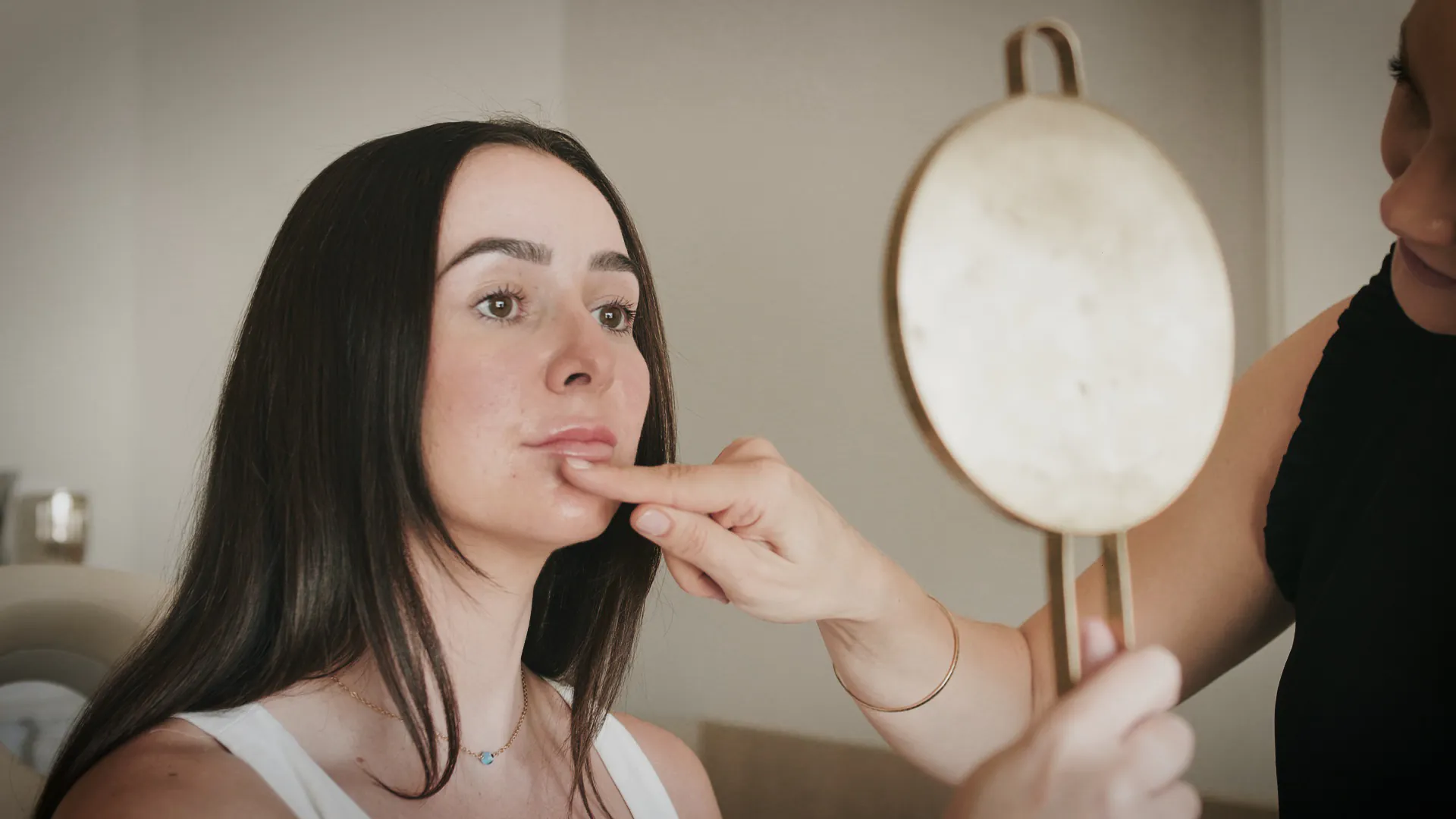
Visible blood vessels can appear on the face or body for several reasons, and they can be a cosmetic concern for some people. These vessels can be tiny clusters on the face or legs, or they can be large and cause discomfort.

At OLA Aesthetics, we use the Fotona Dynamis Nx laser system, which offers several settings that can address small surface vessels and larger, deeper vessels. We are excited to be the first clinic in Western Australia to offer this laser system. Because of the versatility of Fotona, we can choose a treatment that suits your situation and helps to minimise the appearance of blood vessels, big or small.
A Note From Dr Aleks
When I first explored the Fotona Dynamis Nx Line for vascular work, what stood out was the range of wavelength combinations that allow us to address both small, superficial vessels and larger, deeper ones. With this device, I have the opportunity to match the approach to the characteristics of each vessel type.
My priority with each treatment is to provide my patients with clear information about our treatment options, along with detailed guidance about pre- and post-treatment care. With Fotona, there is less downtime, and we are able to provide bespoke care to each of our patients.
Treatment Areas
- Facial telangiectasias
- Spider veins (face & body)
- Diffuse facial redness
- Rosacea-related vascularity
- Cherry angiomas
- Hemangiomas
- Port wine stains
- Blue veins (periorbital, facial)
- Nasal veins
- Leg veins
- Post-inflammatory erythema
Treatment Summary
- Anaesthetic: None or optional topical
- Procedure Time: 15–45 minutes
- Downtime: Minimal
- Risks: See below
- Full Results: 4–8 weeks
- Longevity: Maintenance varies based on vascular concern
What Is a Fotona Vascular Treatment?
A Fotona vascular treatment uses light wavelengths to target visible blood vessels on the face or body. It is used to treat vascular concerns like spider veins, broken capillaries, and reticular veins. The treatment can be adjusted to suit different vessel sizes and depths.
How Do Fotona Vascular Treatments Work?
Long-Pulse Nd:YAG
The long-pulse Nd:YAG wavelength is well suited for vascular structures because it penetrates the skin at a depth that reaches both small and moderately sized vessels. The laser energy is absorbed by haemoglobin, which heats the vessel walls and causes them to collapse. Once the vessel is damaged, the body gradually absorbs it.
Endovenous Laser Ablation (EVLA)
Endovenous laser ablation, or EVLA, treats larger veins such as the great saphenous vein in the leg. A laser fibre is inserted directly into the vein using ultrasound guidance. Laser energy is delivered along the inside of the vein, causing it to heat, contract, and eventually close. Blood is rerouted to healthier veins in the body, and the treated vein gradually disappears.
The OLA Experience
Consultation
Visible vessels vary widely in type, size, and location, which is why a consultation is essential. During your appointment, Dr Aleks or Dr Indi will assess the areas of concern and determine whether our laser treatments will be beneficial. Vessel characteristics such as colour, depth, and distribution are all taken into account when planning your treatment.

Preparation
Before your procedure, we will provide clear guidance based on your skin type, medical history, and the treatment area. This may include temporarily pausing specific medications, avoiding blood-thinning supplements, or limiting topical products that could increase sensitivity. We recommend staying out of direct sun exposure in the days leading up to your procedure to reduce the risk of unwanted pigmentation changes.

Treatment
Not all vascular treatments are the same, and the experience will depend on the type of vessel and the method used. Treatments for small capillaries typically involve surface-level laser pulses that may feel warm on your skin. During this treatment, we will give you protective eyewear and treat the visible vein a small section at a time. In cases where EVLA is used, we will numb the area and then insert the fibre into the vein through a tiny hole big enough for a thin catheter.

What Is the Average Downtime and Recovery?
Downtime after a Fotona vascular treatment varies depending on the treatment area and technique used. Surface-level treatments may cause mild redness, swelling, or temporary darkening of the vessels. After EVLA, you may experience mild bruising, tightness, or tenderness along the treated vein, and compression stockings are usually worn for one to two weeks. You can expect to return to most normal daily activities the same day, but we may have you avoid strenuous exercise.
What Results Can I Expect?
You may see results with smaller vessels right away, but it can take longer for larger or deeper veins to disappear. You should be able to see your final results once any post-treatment redness resolves and your body has completed the natural clearing process. In some cases, it takes multiple treatments to clear the visible vein.
Fotona Ablative Micro Coring FAQ
Could Fotona Vascular Treatments Be Right for Me?
Candidacy depends not only on the type and location of the vessels but also on overall skin health, medical history, and treatment goals. With this platform, we can treat all skin types and tones with settings that can be adjusted for each person.
Those with certain medical conditions, bleeding disorders, or photosensitivity may need to consider different options. A consultation is the best way to determine whether this treatment is right for you.

Request Your Private
Consultation at OLA Aesthetics
Fotona vascular treatments offer precise options for addressing visible veins using light-based technology suited to different vessel types and skin tones. At OLA Aesthetics in West Perth, Dr Aleks and Dr Indi use the Fotona Dynamis system to perform these procedures with consideration for safety, vessel depth, and skin response.
To learn more or request an appointment, call us on (08) 6114 0533 or contact us through our website.
We make recommendations based on your specific needs and features rather than current trends or fads.


