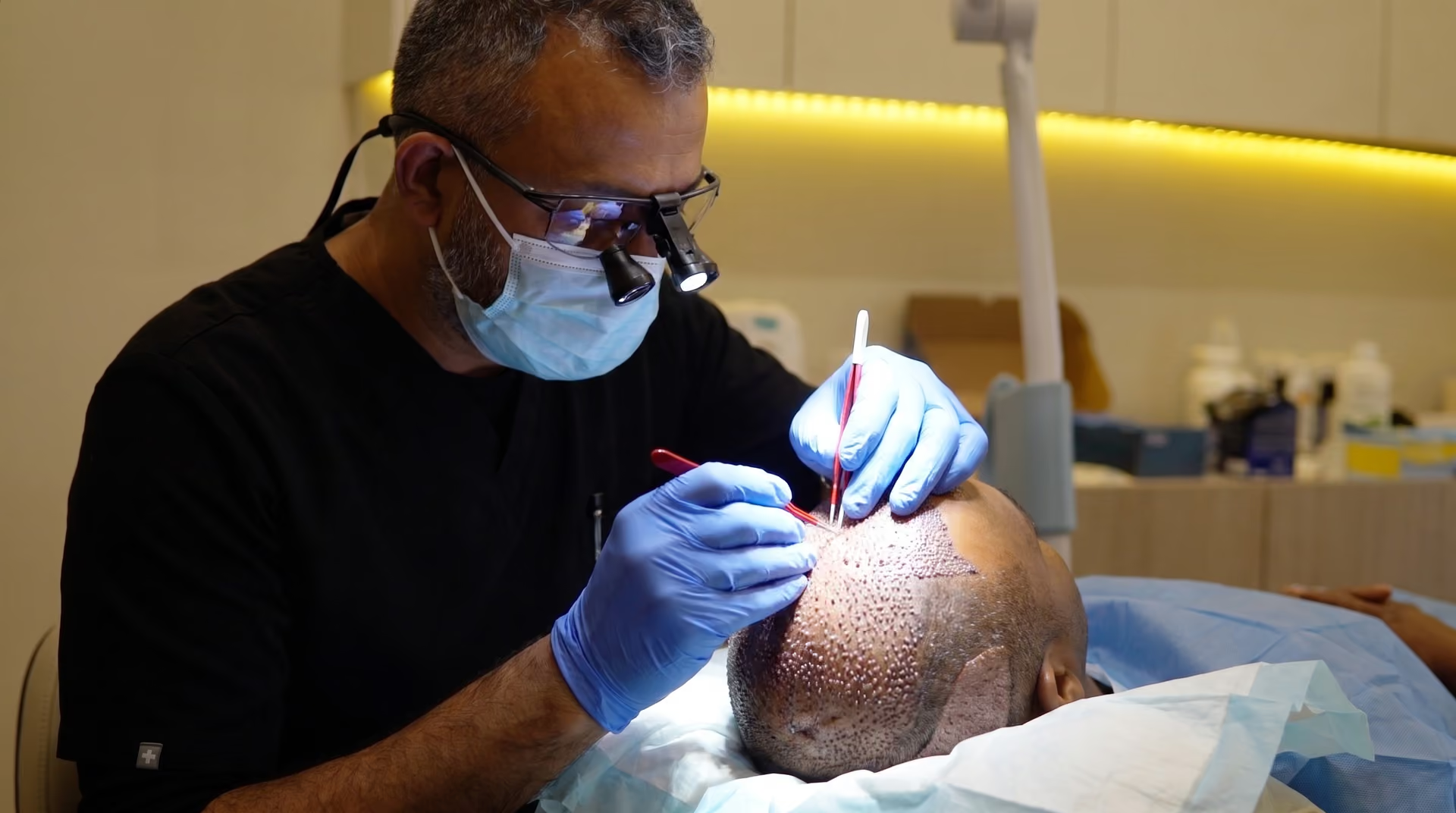
Afro-textured hair has a beauty and structure all its own, and it deserves a restoration approach built around it. At OLA Hair, our registered doctors use precise follicular unit extraction (FUE) to rebuild density and redraw a hairline that honours your natural curl pattern, growth direction and features. Every treatment is planned privately, performed in our West Perth clinic, and guided by the same integrity and discretion that defines everything we do.
A Note from Dr Indi
Hair is deeply personal, it frames how we see ourselves, and thinning or losing it can affect far more than appearance. That's exactly why I wanted OLA Hair to feel different from the moment you walk in.
Everyone who comes to us is met with honesty first. Before anything else, we sit down together and talk openly about your concerns, and you'll be told plainly whether a transplant is the right choice for you, and if it isn't, we'll tell you that too. Afro-textured hair calls for genuine care and a technique matched to the way it grows, and that is the standard we hold ourselves to on every plan.
More than anything, I want you to feel the same comfort and trust here that OLA was built on. I look forward to welcoming you.
Summary
- Technique: Follicular unit extraction (FUE)
- Anaesthetic: Local anaesthetic
- Procedure length: Varies with graft numbers, often a full day
- Downtime: Minimal; most people return to everyday activities within a few days
- Discomfort: Mild and short-lived
- First signs of growth: From around 3–4 months
- Full results: Around 6–12 months
- Longevity: Long-lasting
- Suitable for: Men and women with Afro-textured or coily hair and a healthy donor area
- Performed by: OLA's registered doctors
- First step: A private consultation to confirm suitability
Treatment Areas
- Hairline & temples - rebuilding or refining a receded frontal hairline and restoring temple points
- Frontal & mid-scalp - adding density through the front and centre, where thinning tends to show first
- Crown - filling a thinning or developing bald spot at the crown
- Diffuse thinning - thickening areas that have thinned evenly across the scalp
- Traction-affected edges - restoring hair lost along the hairline and edges from tight or long-worn styles
- Scar camouflage - reintroducing growth over areas of scarring, where suitableS
Why Afro-textured hair calls for a specialised technique
Not all hair sits the same way beneath the skin. Afro-textured hair grows in tight curls and coils that continue below the surface, so each follicle curves as it descends into the scalp. That single characteristic changes everything about how a transplant should be performed.
Extracting curved follicles demands a slower, more deliberate hand to keep each graft intact, because the risk of damaging a follicle during removal is higher than it is with straight hair. Placement matters just as much: the angle, depth and direction of every graft must follow your natural curl so that new growth blends seamlessly rather than standing apart.
There is an upside worth knowing. Because coily hair covers more of the scalp per strand, thoughtfully placed grafts can deliver rich, natural-looking coverage. Realising that potential simply depends on the experience behind the procedure — which is exactly where a doctor-led, individualised approach earns its place.
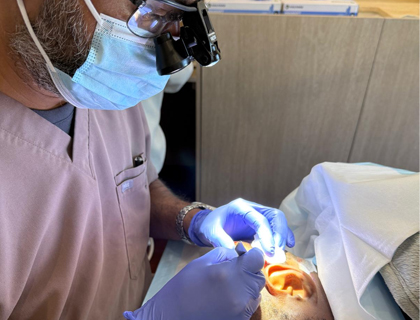
Your Afro hair transplant, step by step
From your first conversation to your final result, every stage is handled by our medical team with care, clarity and discretion.
Consultation & assessment
Your journey begins with a private consultation with an OLA doctor. We assess your scalp, hair characteristics, donor area and the pattern of your hair loss, and we talk honestly about what is realistic for you. Any underlying factors that could affect your result are identified early, so your plan is built on a complete picture.
A plan designed around you
Together we map your new hairline and the areas to restore, then design a graft plan suited to your curl pattern, density goals and features. No two plans are the same, because no two heads of hair are.
The procedure
On the day, the treatment area is comfortably numbed with local anaesthetic. Individual follicles are extracted from your donor area using FUE and placed into the recipient site with precise control over angle, depth and direction. The technique is unhurried by design — protecting graft integrity is the priority throughout.
Recovery & aftercare
You'll leave with clear, tailored aftercare guidance, including how to cleanse and keep the scalp hydrated as it heals. Mild redness or swelling in the first few days is normal. We stay in contact through your follow-ups, monitoring growth as it develops over the months that follow.
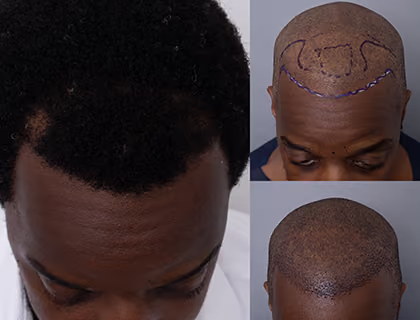
Is an Afro hair transplant right for you?
A hair transplant suits people in good general health who have a sufficient donor area and clear, realistic expectations of what surgery can achieve. It can be an option for hair loss driven by genetics, traction (from tight or long-worn styles), scarring, or thinning that hasn't responded to other measures.
Suitability is a medical decision, not a checkbox. During your consultation, an OLA doctor examines your donor density, hair characteristics, scalp health and any tendency toward raised scarring, then advises whether a transplant or another of our hair restoration options is the right path for you. If it isn't, we'll tell you.
Not sure where you sit? A consultation is the clearest first step.
Results, and the timeline behind them
Transplanted hair sheds within the first few weeks, an expected part of the process, not a setback. New growth typically begins from a few months, with results maturing over roughly 6 to 12 months as the transplanted follicles settle and thicken. Because outcomes develop gradually and individually, patience is part of the plan, and your follow-up appointments exist to track that progress with you.
Individual results vary. Your doctor will discuss what you can reasonably expect based on your own hair and goals during your consultation.
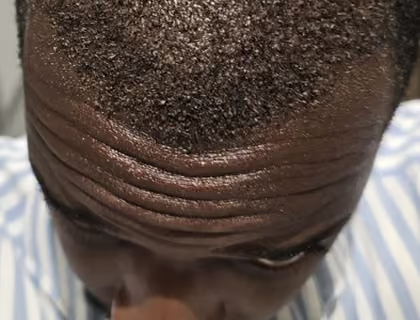
Frequently Asked Questions
Request Your Private
Consultation at OLA Aesthetics
OLA Aesthetics is a doctor-led clinic in a heritage building in West Perth, home to experienced registered practitioners and a small, deliberately curated team. Hair restoration sits within a wider philosophy of skin and appearance medicine, which means your treatment is considered in the context of your whole picture, not sold as a one-size procedure.Integrity and discretion guide every consultation.
We prioritise honest, transparent conversation over pressure, and we'll only recommend a transplant when it's genuinely the right option for you.
AHPRA-registered practitioners · Australian College of Aesthetic Medicine · RACGP · CPCA


